Threshold Three · Reflection
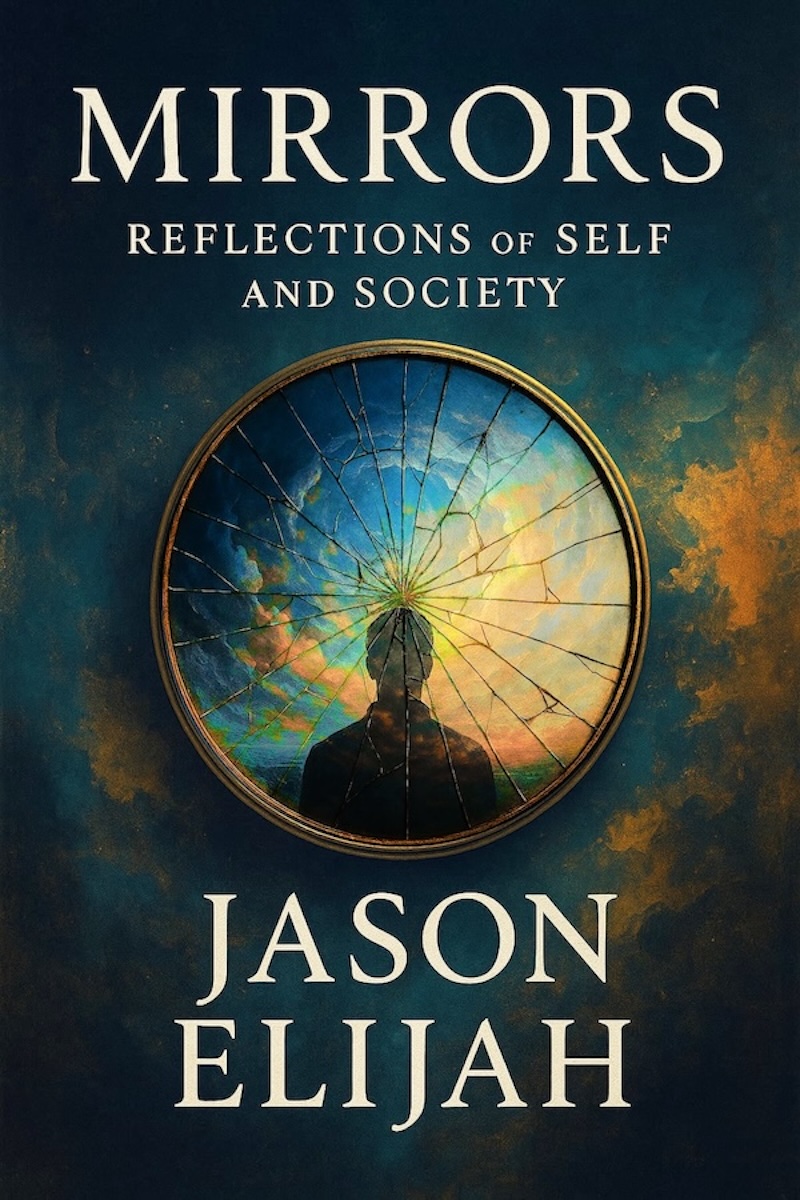
Mirrors
Reflections of Self and Society
What is not recognized within is repeated without.Available on Amazon ↗
About the book
There comes a moment when a pattern becomes impossible to ignore.
The same kinds of relationships. The same arguments. The same fears. The same wounds appearing in different forms, as though something in your life is repeating itself behind the scenes.
You change jobs, but the conflict returns.
You leave the relationship, but find yourself in a similar one.
You promise yourself you will not become like your parents, only to hear their voice coming out of your own mouth years later.
At first, it feels like bad luck.
Then coincidence.
Then something more unsettling.
What if the pattern is trying to show you something?
Mirrors begins with a simple but profound observation: human beings learn who they are through reflection.
Long before we consciously choose our beliefs, fears, habits, and expectations, we are being shaped by the people around us. A child learns who they are in the eyes of a parent. Families pass down more than stories and genetics. They pass down emotional atmospheres, unspoken rules, hidden fears, unfinished grief, and ways of seeing the world.
We inherit and repeat more than we realize.
As the book unfolds, the mirror appears everywhere.
The people who disturb us may be revealing something we have not yet faced. The people we admire may be carrying something we have not yet claimed. Even our strongest certainties can sometimes conceal reflections we do not yet recognize.
But Mirrors is not a book about blaming yourself for everything or reducing life to endless psychological interpretation.
Not everything is projection.
Not every conflict begins within.
The point is not to erase reality. The point is to see more of it.
Because once reflection is recognized, something begins to change.
Reaction slows.
Old patterns become visible.
Inherited stories loosen their grip.
What once felt automatic becomes a choice.
And what once felt like destiny begins to reveal itself as repetition.
As the lens widens, the book moves beyond individual psychology into families, communities, culture, and society itself. The same forces that shape a person also shape groups. Families inherit wounds. Communities inherit fears. Entire cultures can become trapped inside reflections they no longer recognize.
The mirror is larger than it first appears.
At its heart, Mirrors is a book about recognizing how we shape one another. And how seeing clearly can interrupt cycles that might otherwise continue for generations.
Because what remains unseen tends to repeat itself.
And sometimes the first step toward freedom is simply learning how to look.