
The Human Return Library
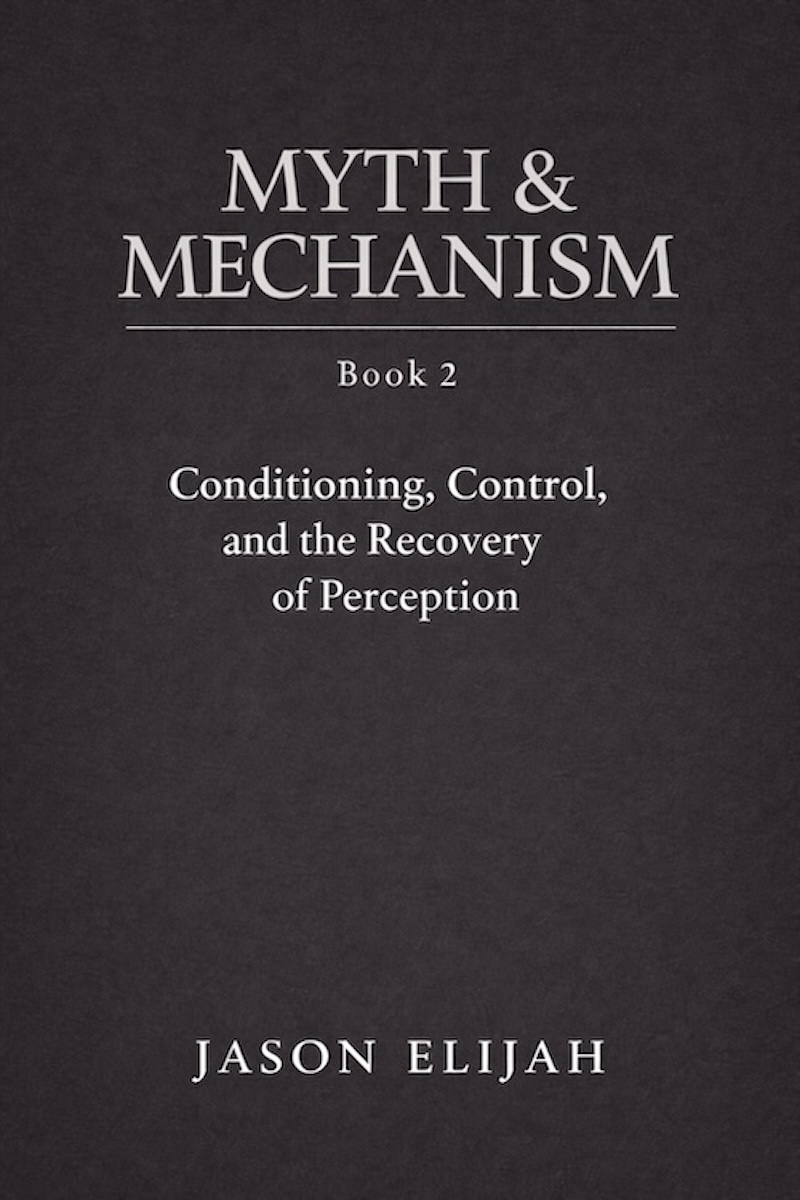
Myth & Mechanism, Book 2
Conditioning, Control, and the Recovery of Perception
A society can be guided into obedience without ever being forced.Available on Amazon ↗
About the book
Myth & Mechanism, Book 2 turns toward one of the more quietly damaging realities in human life: people can be drawn into fear, dependence, and obedience without ever being openly forced. Control often comes in forms that look like care, certainty, belonging, rescue, romance, guidance, or purpose. By the time the harm becomes visible, the nervous system may already have adapted to it.
This book traces that process with unusual clarity. It begins not by asking what is wrong with vulnerable people, but by asking what tends to happen during vulnerable times. Transition, grief, loneliness, identity collapse, early recovery, disorientation, and sudden change do not make a person foolish. They make a person open. The book shows how control systems do not mainly target weakness. They target openness. They move in where the old map has broken and the new one has not yet formed.
From there, the book follows the sequence of capture. First comes relief. Then meaning. Then language begins to harden around sensation. Fear is no longer just fear; it becomes destiny, danger, chosenness, mission, obligation, or warning. Belonging becomes conditional. Doubt starts to feel disloyal. A person who once would have paused to evaluate now feels pressure to interpret, comply, and stay close to the source of orientation. What looked like support slowly becomes confinement.
One of the strongest things about this book is that it does not reduce coercion to one setting or one kind of person. It recognizes the same basic pattern across cult recruitment, narcissistic abuse, sexual coercion, trafficking, panic-based conditioning, ideological capture, and smaller one-to-one systems of control. The surface stories may differ, but the machinery is often the same: symbolic language, fear without proof, identity reshaping, reward and withdrawal, dependency, and the slow replacement of self-trust with obedience.
The book is especially precise in the way it handles meaning. It understands that most control does not begin with lies so obvious that anyone could dismiss them. It begins with language that resonates. Language that names pain, explains confusion, offers direction, and makes a person feel seen. That is why capture can feel so convincing from the inside. The story lands after the sensation, but because relief and meaning arrive together, it feels like recognition rather than influence.
Again and again, Myth & Mechanism, Book 2 returns to the body. Belonging is treated not as an abstract social need, but as a physiological state. Panic is not framed as irrational theater, but as conditioning. Dependency is not romanticized, nor is it moralized. The reader is shown how attention narrows, how fear becomes symbolic, how uncertainty makes certainty feel like safety, and how people can be trained to doubt their own perception while still believing they are acting freely.
What makes the book feel humane is that it never confuses explanation with excuse. It does not humiliate people for what they adapted to. It does not turn vulnerability into a defect. It does not speak as though recovery were simply a matter of thinking harder or believing something better. Instead, it offers a different kind of respect: the respect of mechanism. If something happened in a patterned way, it can be seen in a patterned way. And if it can be seen, it can begin to loosen.
The later movement of the book becomes a study in return. Not return to innocence, and not conversion into some purified self, but the gradual recovery of perception. The reader is guided through the distinction between sensation, interpretation, and story. They are shown why argument so often fails when conditioning lives below the level of logic, and why literacy works better than persuasion. Literacy here means learning to notice what language is doing, what fear is attaching to, what belonging is costing, and where choice is disappearing.
By the final chapters, something steadier comes into view. Meaning without capture. Belonging without obedience. Fear that can be felt without being treated as prophecy. Choice returning in small, almost ordinary moments: a pause before compliance, a question where silence used to be, a body signal noticed before a story takes over. The transformation is not theatrical. It is more important than that. It is the return of inner space.
This is a book about control, but it is even more a book about seeing clearly.
When the mechanism becomes visible, obedience stops feeling like fate.