
The Human Return Library
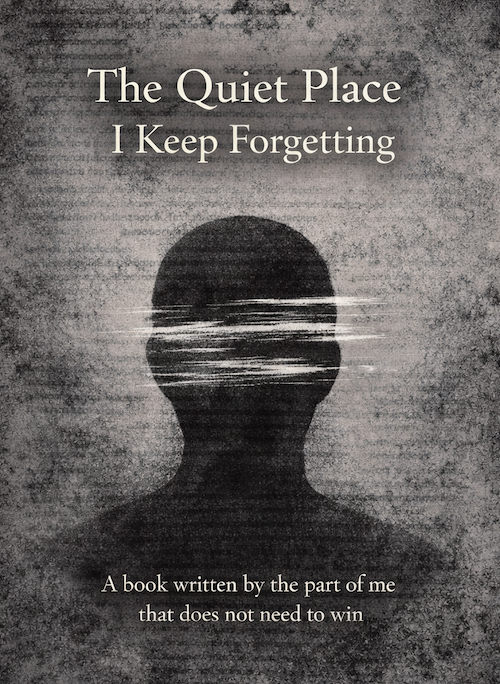
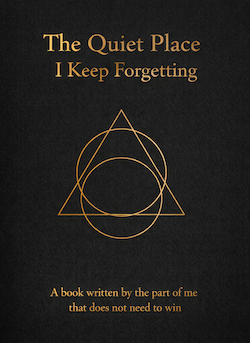
The Quiet Place I Keep Forgetting
a book written by the part of me
that does not need to win
An experiment in radical empathy.Available on Amazon ↗
About the book
I wrote this book for a friend.
A close friend who was struggling with addiction, shame, depression, self-destruction, and battles most people never saw.
People told me not to do it.
“Let it go.”
“You can’t help someone who doesn’t want help.”
“Stop wasting your energy.”
Maybe they were right.
But I couldn’t accept it.
One night, while reading through letters he had written, songs he had written, and messages he had sent over the years, something unusual happened. I began to hear his voice in my head. Not just his words, but the rhythm beneath them. The way he explained pain. The way he avoided it. The way he made sense of the world.
And a thought came to me.
What if I tried to write a book from inside that voice?
Not about him.
As him.
Without trying to fix him.
Just to understand.
So I did something that made very little sense.
I started studying the way he spoke. I wrote down things he said. I tried to understand what the world looked and felt like from his perspective. Then I sat down and wrote a book in his voice, from his point of view, describing his experience as honestly as I could.
There was no plan to publish it. No expectation that anyone else would ever read it.
The book was for him.
When it was finished, I asked if I could read it to him.
As I read, there were moments when I thought I should stop. Some of the material was intensely personal. At times it was difficult to continue without getting emotional.
After each chapter, I paused.
Each time, he quietly said the same thing.
“Keep reading.”
So I did.
When I reached the end, he said very little.
But later, he began mentioning changes in himself that he couldn’t quite explain. Situations that once triggered immediate aggression no longer did. Reactions that had always felt automatic no longer seemed automatic.
I don’t know exactly what happened.
Maybe hearing his experience reflected back to him without judgment allowed him to see something he had never seen before.
Maybe not.
Either way, it convinced me of something.
Sometimes recognition can touch places advice can’t reach.
The Quiet Place I Keep Forgetting is the result of that experiment. It is written in the voice of someone who has spent so long outrunning himself that stopping feels dangerous. Someone who relies on speed, intensity, manipulation, control, aggression, distraction, and constant motion to keep deeper pain at a distance.
More than anything, it is an attempt to understand suffering without condemning the person who suffers.
Read an excerpt from this book
Chapter 15
Language as Misdirection
Language was never for clearing things up.
It was for moving attention.
Pull it.
Split it.
Wear it out.
Words were used to throw weight somewhere else.
If meaning stayed shaky, nothing could stick.
If sentences fought each other, no one could follow.
If the volume went up fast enough, sense didn’t matter.
That was the point.
Exaggeration made space.
Contradiction made fog.
Escalation beat the clock.
A word didn’t have to be true.
It just had to land.
Or sting.
Or scramble the moment long enough to end it.
Language learned to move fast.
When pushed, it swerved.
When boxed in, it blew up.
When touched, it snapped.
Questions broke apart mid-air.
Answers came too quick to grab.
Tone did the work.
Content lagged behind.
Talking turned into ground control.
If the room felt dangerous, it shut down.
If it felt unstable, it dragged out.
If it felt confused, blame spread thin.
That spread mattered.
No one could pin anything down.
No one held the whole shape.
Language also hid things.
Different versions ran at the same time.
None stayed long.
Each one messed with the last
just enough to keep people busy.
Truth didn’t vanish.
It sank.
The listener worked harder than the speaker.
Figuring it out became their job.
That switch was protection.
When talk overloaded the moment,
responsibility timed out.
Memory skipped.
Context dropped.
I stayed moving.
Over time, it locked in.
Words stopped pointing at anything.
They existed for effect.
They hit, then disappeared.
Precision fell off.
Silence got dangerous.
Pauses invited eyes.
So the mouth stayed busy.
Fast enough to avoid getting caught.
Thick enough to keep people out.
After a while, even I stopped tracking what I said.
Only the result mattered.
Did the room change?
Did the pressure drop?
Did the questions stop?
If yes, it worked.
The cost came later.
Meaning got thin.
Trust dried up.
Words stopped weighing anything.
Yes, they were lies.
But they were never meant to carry weight.
Language kept working.
It just stopped connecting.
How long it keeps going
depends on whether misdirection still brings relief,
and how much heat builds
when every sentence exists
to get away from the one before it.