The Human Return Library
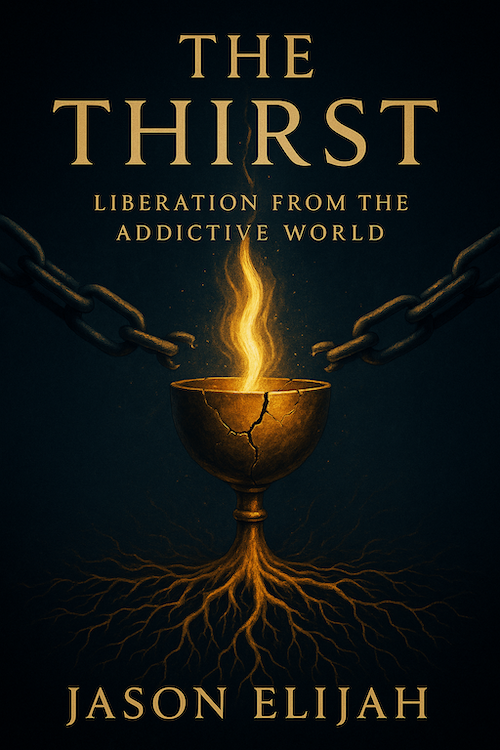
THE THIRST
Liberation from the Addictive World
Craving is not a flaw of characterAvailable on Amazon ↗
but a misdirected signal of aliveness.
About the book
The Thirst explores addiction from a perspective rarely offered in modern discussions. Instead of treating craving as weakness, pathology, or moral failure, the book approaches it as a signal that something deeply human has been misdirected. Beneath every habit that grips the nervous system lies a more fundamental impulse: the desire for connection, regulation, meaning, and relief.
In a world built to capture attention and amplify stimulation, that impulse is constantly redirected toward substitutes. Substances, digital environments, identities built around performance, and endless distraction begin to stand in for nourishment. The result is a culture where many people feel both overstimulated and strangely empty, chasing relief through patterns that slowly tighten around them.
The Thirst examines how these patterns form. It looks closely at the nervous system, at dopamine-driven reward loops, at trauma memory, and at the environmental designs that exploit human attention. Addiction appears as a landscape of habits that shape daily life: substances, compulsive scrolling, emotional numbing, image maintenance, and the quiet exhaustion of living inside cycles that never truly satisfy.
Yet the book does not frame addiction as a battle between willpower and weakness. It approaches craving with curiosity and clarity. Hunger, after all, is not the enemy of life. It is evidence that something in us is still reaching toward it. The deeper work is learning how to read that signal again, distinguishing stimulation from nourishment, relief from rest, and escape from genuine contact.
Throughout the book, attention gradually shifts from control to awareness. Instead of forcing change through discipline alone, the reader is invited to observe how craving moves through the body and mind, how it forms loops, and how those loops begin to loosen when they are seen clearly. The emphasis is on presence, embodiment, and the slow rebuilding of trust between the person and their own experience.
The result is a vision of recovery that is both grounded and humane. Addiction is neither romanticized nor condemned. It is understood as a pattern that once helped a person survive, but now constrains their freedom. When the pattern becomes visible, something inside begins to shift. Curiosity replaces panic. Space appears around impulse. Life becomes reachable again.
In that sense, The Thirst is not ultimately a book about addiction.
It is a book about remembering what the hunger was for in the first place.
Read an excerpt from this book
Chapter 2
The Invisible Addictions
You can quit drinking and still be drunk on distraction.
You can stay sober from the substance and still be high on the screen. The modern addict rarely looks like the stereotype. They are not always trembling in an alley or slumped against a bar. They are answering emails, running companies, raising children. They are scrolling, snacking, swiping, refreshing. The drug is everywhere and invisible, which makes it harder to resist.
The world has learned how to package stimulation so perfectly that we no longer recognize it as poison. It comes wrapped in convenience, productivity, entertainment. We call it connection. We call it normal. We call it life. But what it often is, beneath the polish, is a slow suffocation — a numbing that passes for belonging.
The screen glows like a small altar. It promises recognition, pleasure, escape. Each notification is a prayer bead, each like a drop of synthetic affection. The dopamine that used to reward hunting, building, loving, now fires for pixels. The body cannot tell the difference between a human touch and a digital ping, between a feast and a feed.
The architects of this new world know exactly how we work. They study our nervous systems with the precision of engineers and the patience of priests. They build variable rewards — that unpredictable rhythm that keeps you checking, just in case something wonderful appears. It is not your weakness that keeps you there. It is design.
Look at the endless scroll. It never ends because your longing doesn’t either. Look at the “recommended for you” page — it is the machine whispering, “I know what you crave better than you do.” Look at the hours that vanish without memory. This is not leisure; it is hypnosis.
And yet you return, because buried inside the hypnosis is a promise that still feels sacred: that you might matter, that you might be seen. The digital world sells you that hope. It feeds on the ache of loneliness and the fear of irrelevance. The more you reach for validation, the more it pulls you away from real touch, real air, real time.
Sex has followed the same logic. The instinct to merge, to find warmth, has been refashioned into spectacle. Pornography becomes both mirror and mask — a way to see yourself without having to be seen. The brain floods with novelty, the body with isolation. Intimacy turns into performance, and pleasure becomes proof that you exist.
Food follows too. The modern pantry is a gallery of bright deceits. Processed sweetness, chemical savor, salt engineered to the edge of obsession. You eat to feel whole, but what you swallow is memory without nourishment. The same companies that sell you indulgence also sell you guilt, and that loop becomes its own addiction — the binge and the shame, the promise and the punishment.
These are the quiet twins of our time: sex and food, gaming and scrolling, constant stimulation disguised as freedom. They do not leave track marks or breath tests. They do not crash cars or get you arrested. They simply steal your hours and call it choice.
If you have ever lain in bed, phone in hand, long past the moment you meant to stop, you know the trance. If you have ever opened the fridge not from hunger but from ache, you know the ritual. If you have ever sought touch only to feel emptier afterward, you have glimpsed the shape of the spell.
None of this means you are broken. It means you are sensitive to the ache of modern life — and that sensitivity is not your curse, it is your compass. The ones who feel it most are the ones still alive enough to notice something is missing.
The cost of these invisible addictions is not just time or energy. It is attention, the currency of consciousness. It is tenderness, the ability to be moved by simple things. It is sleep, which once healed you nightly. It is silence, which once reminded you who you are.
Every generation has its demons. Ours are dressed as convenience.
The first step toward freedom is not to delete every app or swear off every pleasure. It is to see clearly how the spell works, to notice what it takes and what it gives, to remember that every craving began as something innocent — a need to feel alive.
When you begin to see the pattern, the web starts to loosen. The impulse loses its authority. The phone becomes an object again, not a portal to your worth. The food becomes sustenance, not confession. The body becomes home, not merchandise.
You don’t have to renounce the world to be free. You only have to return to it awake.
The invisible addictions thrive in blindness. They die in light.
This is the beginning of sight.