
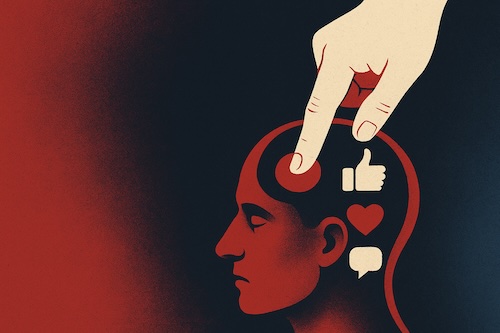
The Hidden Hand of the Algorithm
Every time you scroll, pause, or click, a system is making decisions about what you see next. Not necessarily a neutral one. Platforms optimize feeds around objectives that may include engagement, advertising, retention, or other commercial goals. Those objectives are not always the same as yours.
We imagine ourselves as free agents online, and we are. But freedom does not mean immunity from influence. The way content is ordered can affect what receives our attention, what we encounter repeatedly, and what begins to seem important or common. How far those effects extend into an individual's beliefs or political choices depends on the person, the platform, and the surrounding circumstances.
In 2014, Facebook reported an experiment involving nearly 700,000 users in which the emotional tone of posts appearing in news feeds was altered. Changes in the emotional language users subsequently posted were detectable, though small. It demonstrated that feed selection could influence expression under experimental conditions. It did not prove that algorithms can manufacture particular emotions or political opinions at will.
That distinction matters. If we are going to challenge manipulation, our criticism needs to be more accurate than the systems we are criticizing.
From Nudges to Conformity
Digital platforms use features designed to hold attention. A notification dot, an endless scroll, an autoplay video: none is trivial simply because it is small. They can make continuing easier than stopping, encourage checking habits, and put immediate rewards close at hand.
But saying they universally “hijack dopamine circuits,” reward conformity, or punish dissent gives a misleading impression of a single, proven mechanism. Human behavior is more varied, and algorithms do not all operate alike.
Some ranking systems favor material likely to provoke interaction. In certain environments, that can amplify outrage and make popular positions more visible than quieter minority views. In others, personalization can help people find unfamiliar ideas and communities. The effects must be investigated rather than assumed.
The danger is not a machine that secretly controls every thought. It is the more ordinary and consequential possibility that repeated choices about visibility change the conditions under which we form judgments.
The Cost of Invisible Influence
The stakes are personal and societal. Recommendation and ranking systems can influence the visibility of news, the circulation of misinformation, and the public attention available to movements and institutions. They can interact with existing prejudice, polarization, and fear.
In Myanmar, Facebook's role in the spread of anti-Rohingya hate speech became a serious subject of international criticism and investigation. That history deserves careful examination; describing amplification as a contributing concern is different from claiming one algorithm alone caused the violence.
And in the United States, the relationship between online misinformation, political trust, and voting behavior remains a field of study. There is evidence of exposure and influence, but sweeping claims about shifts in turnout or election outcomes require specific support.
These systems do not have to convince everyone of anything. Changing which stories people repeatedly encounter can matter, even where no one is forced to believe them. Yet it is precisely because that influence is difficult to measure that transparency, independent research, and careful language are so important.
What You Can Do
- Interrupt the feed. Disable notifications that do not serve you. Decide when to engage instead of responding automatically to every prompt.
- Diversify input. Seek sources beyond your usual feeds. Read original reporting and competing arguments, not only reactions to them.
- Notice the nudge. When you feel compelled to click or react, pause. Ask what the design is encouraging and whether that action serves your own purposes.
- Support accountability. Ask platforms and policymakers for meaningful transparency, opportunities for independent audit, user control, and protections against harmful design.
The Urgency
Digital nudges may seem small. Across millions of people and countless interactions, small design choices can have consequential effects. But we should not confuse influence with total control, or the erosion of attention with the disappearance of free will.
The question is not whether algorithms shape what we encounter. They do. The question is who decides what they optimize, how their effects are tested, and how much agency people retain within the systems they use.
That is a public question, not merely a personal habit to fix. We should keep asking it.